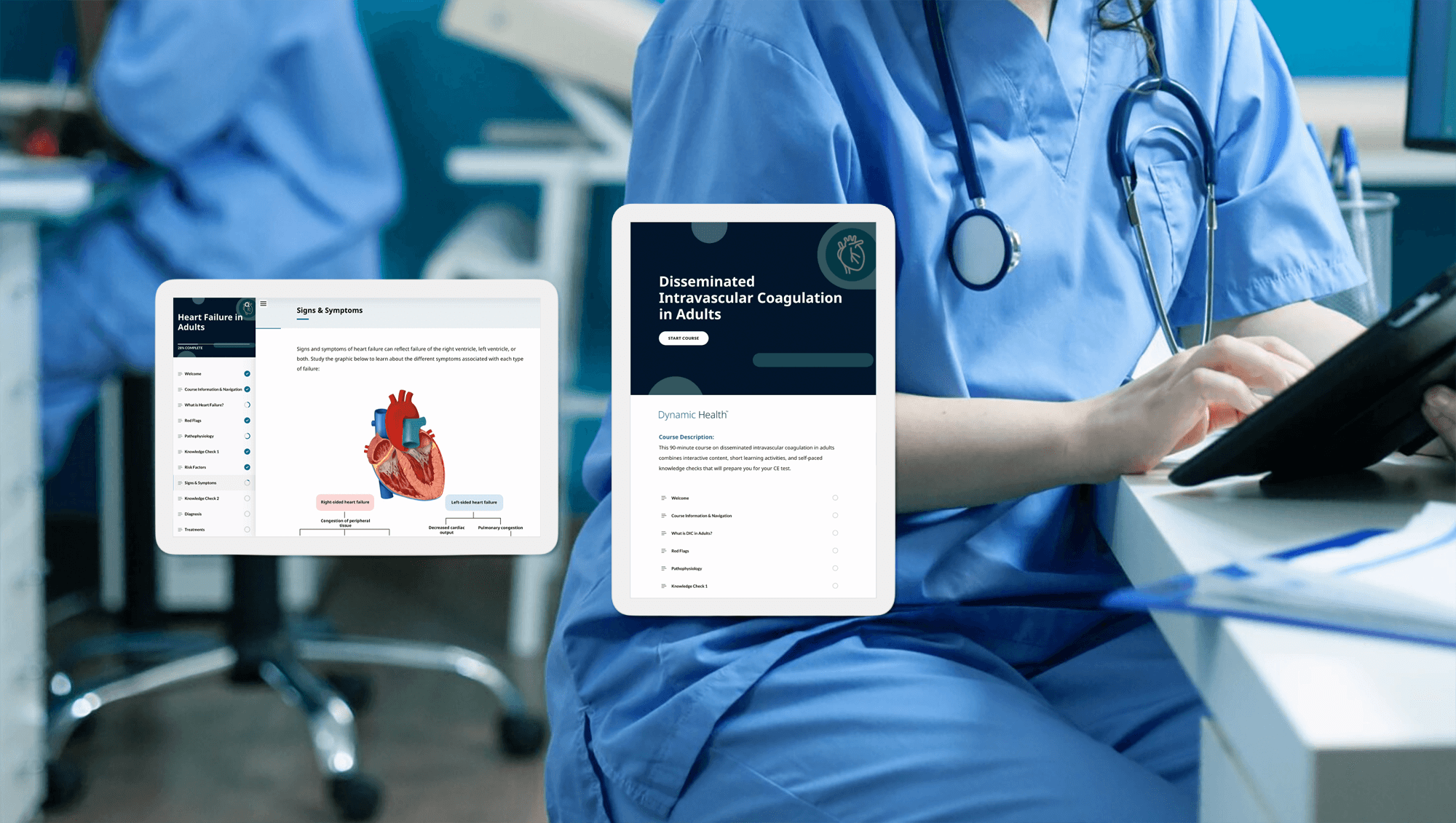
Dynamic Health E-Learning
Jr. Creative Lead (Lead Designer)
Time
2.5 Years
Team
1 Lead Designer, 3 Junior Designers, 4 Medical Writers/Nurses, 1 Doctor
Skills
Product Design, Interaction Design, User Research, Prototyping, Coding, Mentoring
Deliverables
Responsive Designs, Scalable Course System
CHALLENGE
Current e-learning solutions for medical professionals are demeaning and unresponsive.
With over 1,500 clinicians on EBSCO’s Dynamic Health platform and many more seeking continuing education, I built a 0→1 SCORM-compliant e-learning platform in a Fortune 200 healthcare corporation for working clinicians to gain further education
IMPACT
Design + Development
Shipped scalable SCORM-compliant e-learning platform serving 1,500+ clinicians.
Mentorship
Increased team output by 25% through mentorship and process improvements.
Leadership
Persuaded C-suite executives to invest in new tooling and expand the design team.
Medical Illustration
Produced 400+ scientific illustrations and prototypes in 2D and 3D alongside clinicians.
THE PRODUCT
We delivered 200+ responsive courses for 1,500+ medical professionals and ongoing.
We launched an internal e-learning platform for EBSCO clinicians, enabling continuing education through SCORM compliant courses. Demonstrating the value of design in this product to senior management led to increased investment, growing the design team.
INITIAL RESEARCH
I tested these users:

Nurses
Extremely busy nurses including those that work more in an office setting and those that work in emergency settings during the COVID pandemic. They are contracted to work with EBSCO as medical writers.
"I want to get more education credits while juggling my job at EBSCO and at the hospital."

Doctors
Extremely busy doctors who often work full-time jobs in their area of specialty and often work with EBSCO in senior level medical editor positions.
"I just got off of my shift from the ER, and I'll be here (at EBSCO) reviewing some medical algorithms for today."
INITIAL RESEARCH
Quick interviews and competitive analysis
To evaluate the current sentiment towards medical e-learning tools performed a competitive analysis. I synthesized these overall insights:
Insight 1
Design for engaging, interactive learning experiences
Insight 2
Incorporate memorable, game-based elements
Insight 3
Create a calm, dignified environment for tired clinicians
Insight 4
Ensure a responsive experience across desktop and tablet in clinical settings
INITIAL RESEARCH
Further analysis through ranking matrix
I facilitated a remote ranking exercise with clinicians and uncovered a clear preference for realistic, calm design aesthetics over the highly stylized approaches of competitors like Picmonic and Sketchy.
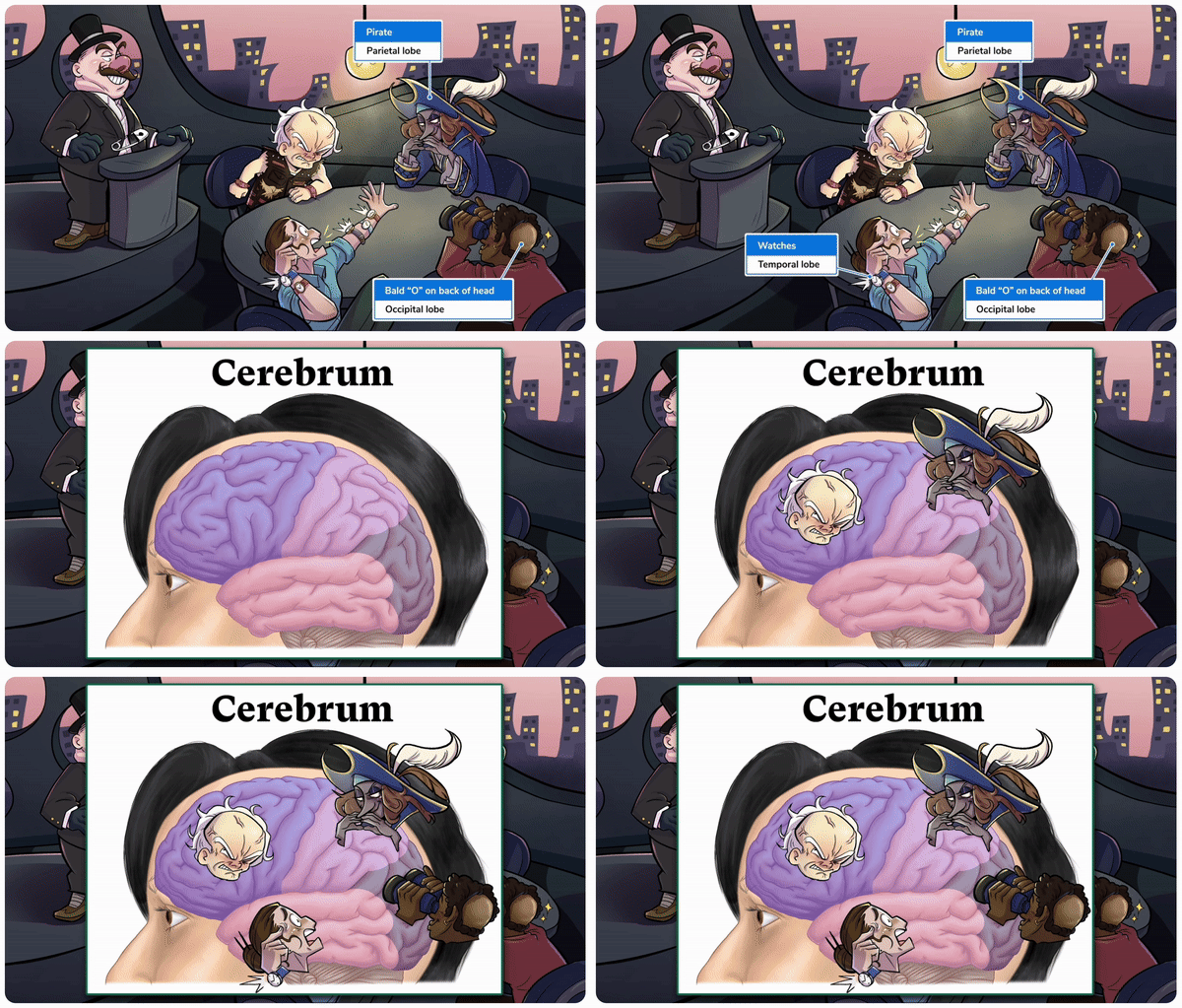
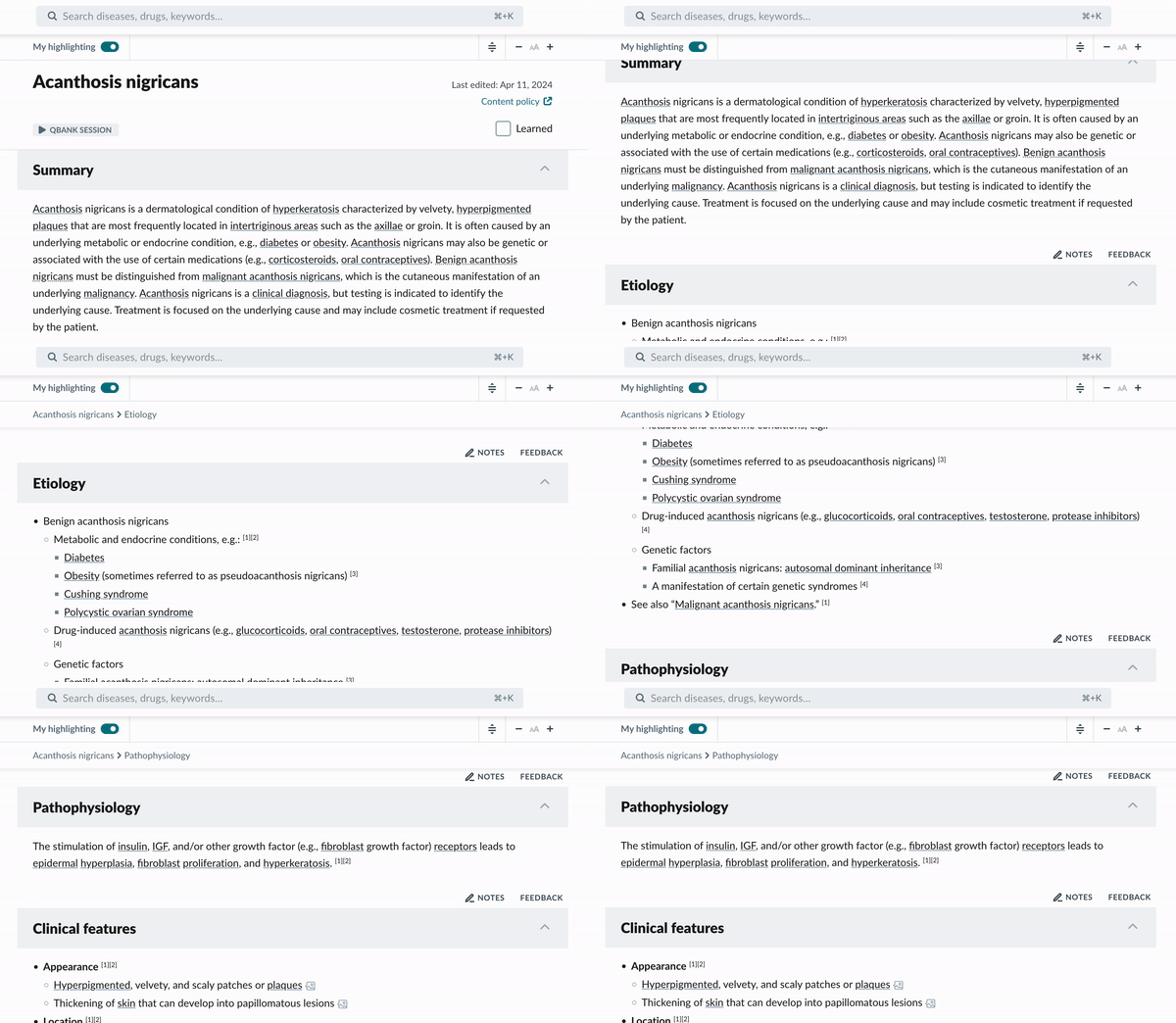
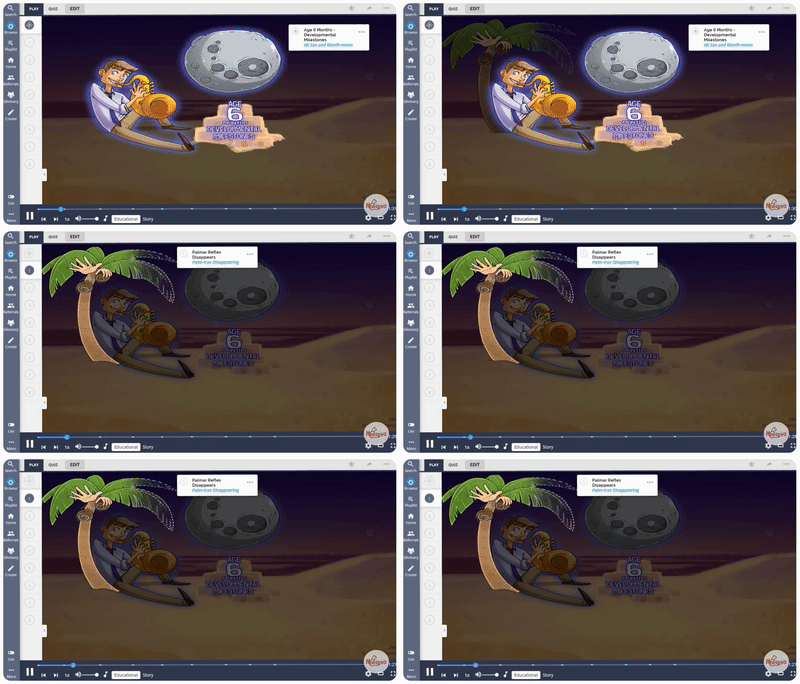


PLATFORMS
We optimized course responsiveness to support clinicians using the platform on the job
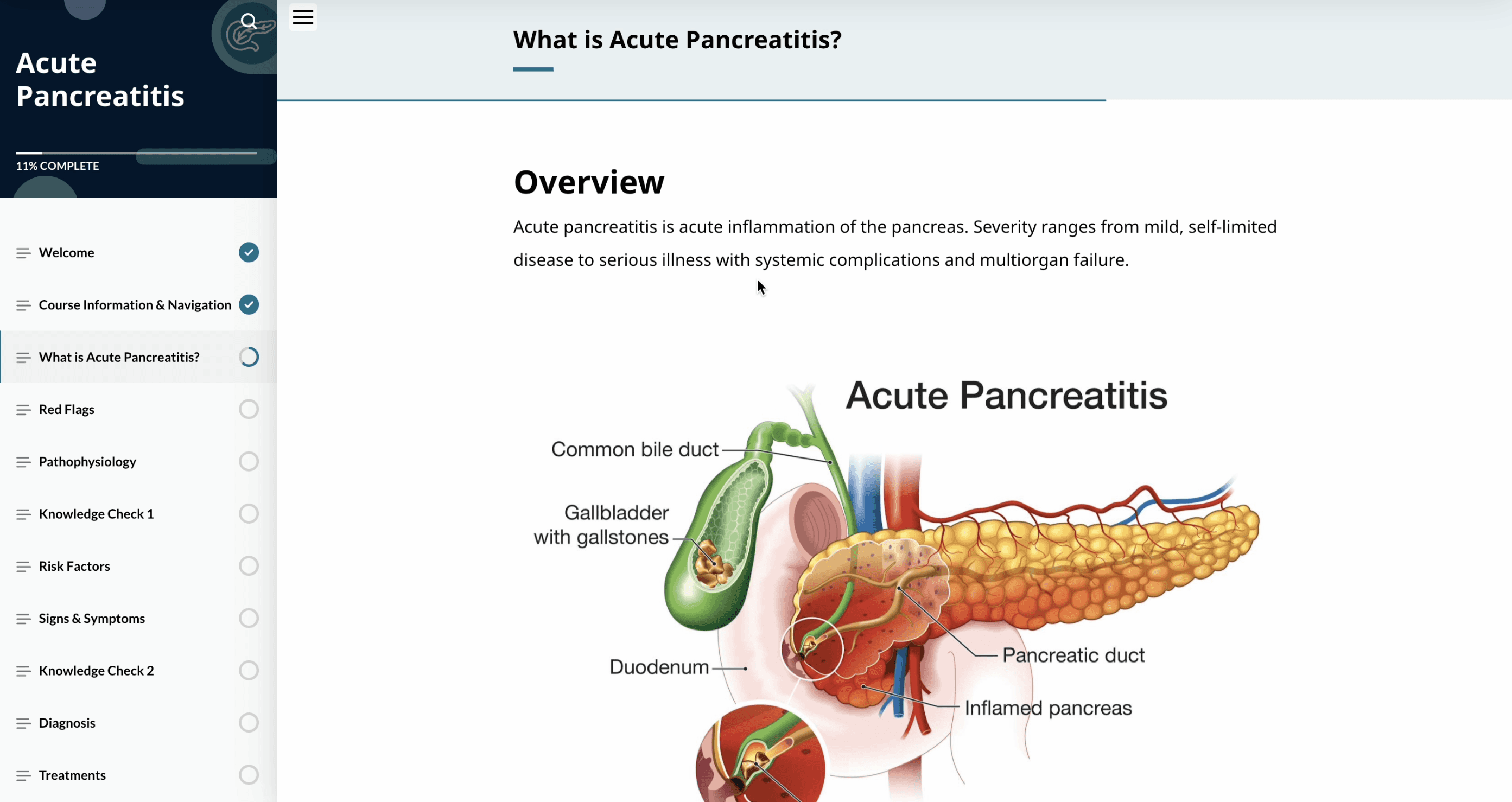
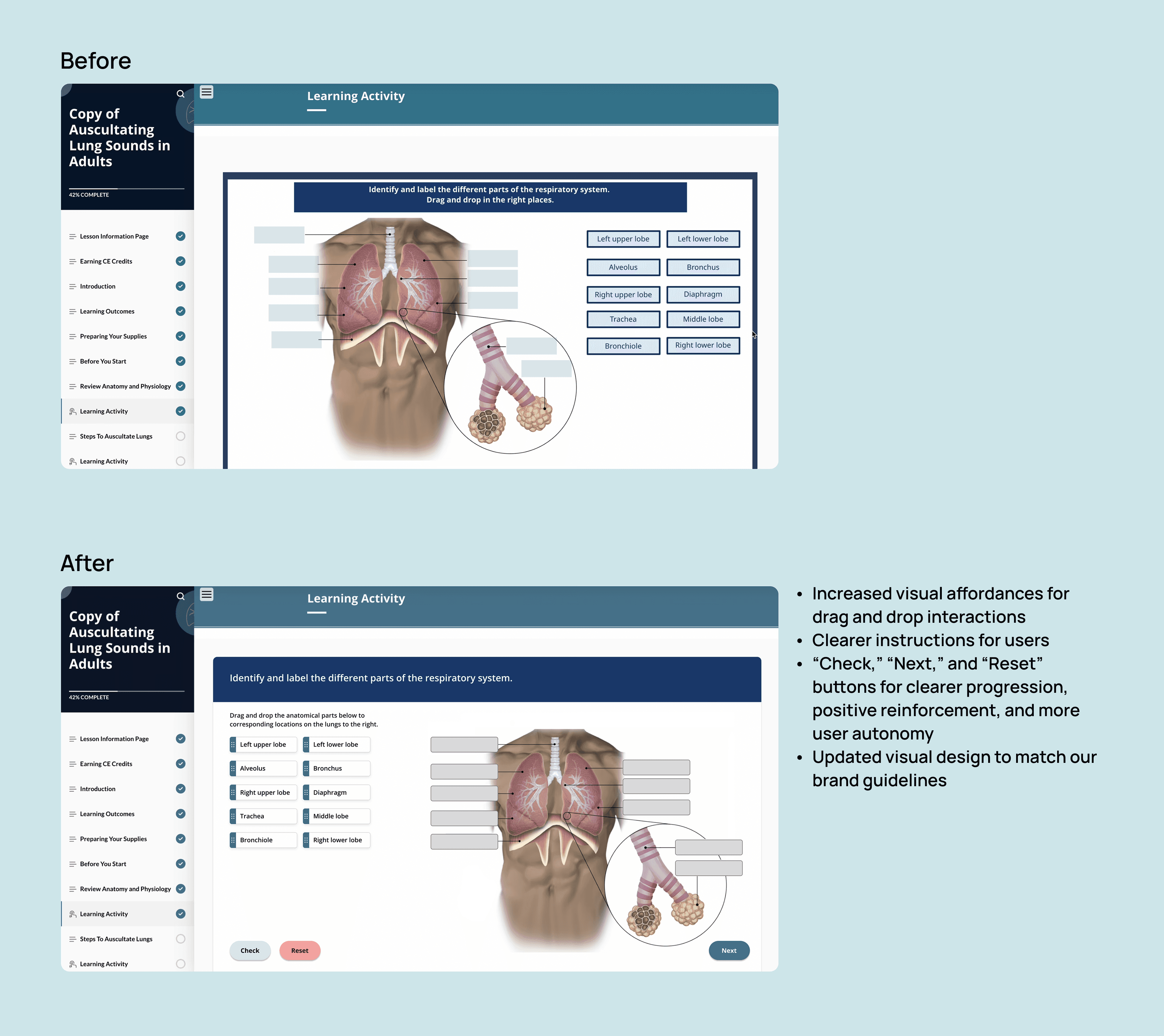
To accommodate our busy clinicians, we prioritized responsive courses optimized for desktop and tablet, since they mentioned that mobile use was rare in hospitals. Moving to Articulate 360 made this shift feasible, allowing our engineer-less team to deliver fully responsive content efficiently.

AFTERWORD
By implementing a modular course design and encouraging leadership to Articulate 360, we scaled course production and streamlined onboarding for new designers. My team and I created most illustrations, animations, games, and videos in-house, and I conducted interviews and surveys with 40+ clinicians to ensure the content supported engaging, interactive learning while maintaining professional standards.